
[28 August 2025] – The Singapore Association of the Visually Handicapped (SAVH) held its inaugural Vision Rehabilitation Conference on 20 and 21 August 2025, marking Singapore’s first dedicated platform focused on visual impairment, rehabilitation, and solution-driven discussions.
Themed “Pathways to Independence: Bridging Support, Skills and Society”, the two-day conference at One Farrer Hotel brought together more than 150 professionals, advocates, and community partners from the medical, education, and social service sectors. Clients of SAVH were also in attendance, offering valuable lived experiences.
“This conference is a major milestone for the visually impaired (VI) community in Singapore,” said Mr Joshua Tseng, Executive Director (Acting) of SAVH. “For the first time, SAVH brings together passionate minds from healthcare, social services, and med-tech – people who can drive real change to bring about a more inclusive environment. When these sectors connect, innovation happens. And for persons with vision impairment like myself, that means stronger support, smarter solution, and a more inclusive future. Things have changes so much since I lost my eyesight more than 10 years ago, and I’m excited to be part of this movement.”
Guest-of-Honour Mr Eric Chua, Senior Parliamentary Secretary, Ministry of Law and Ministry of Social and Family Development, delivered the opening address. He noted, “Creating a truly inclusive society that supports and strengthens the quality of life for persons with disabilities is a multistakeholder effort. I am glad that there are like-minded partners such as SAVH, as well as all its social service professionals, working alongside the Government to advance accessibility and inclusion. This demonstrates our strong social compact, as we work towards building a more caring and inclusive Singapore.”
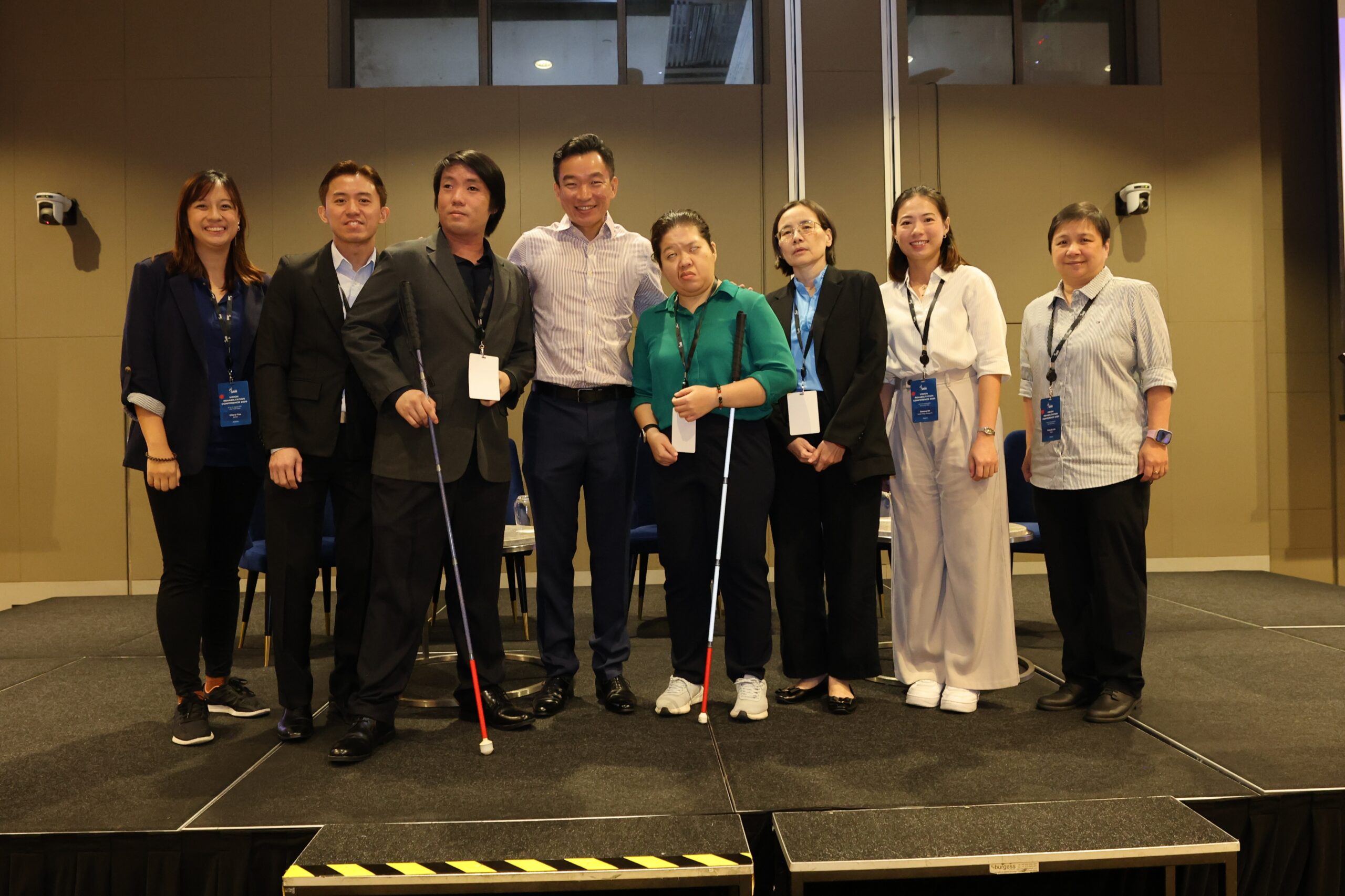
Key conference topics explored the Vision Rehabilitation Pathway and the importance of staying connected, eye care and prevention, reframing perceptions of blindness, and leveraging assistive technology and innovation to enhance independence and employment opportunities for persons with visual impairment. Networking sessions allowed participants to exchange insights and discuss strategies to improve accessibility for persons with visual impairment.
Among the many inspiring stories shared at the conference was that of speaker Ms Tan Siew Ling, Assistant Manager (Innovation Division), SG Enable, who shared her personal journey of growing up with visual impairment and later developing hearing loss. She reflected on service gaps, positive experiences, and the importance of a support system, saying: “The topics covered during the conference were highly relevant and highlight the concerns of clients and support systems, and how we can better lend support.”
The conference successfully raised over $260,000, with $250,000 qualifying for a dollar-for-dollar matching grant from Tote Board, bringing the total funds raised to more than half a million dollars. All proceeds will go towards essential training, resources, and initiatives supporting the VI community.
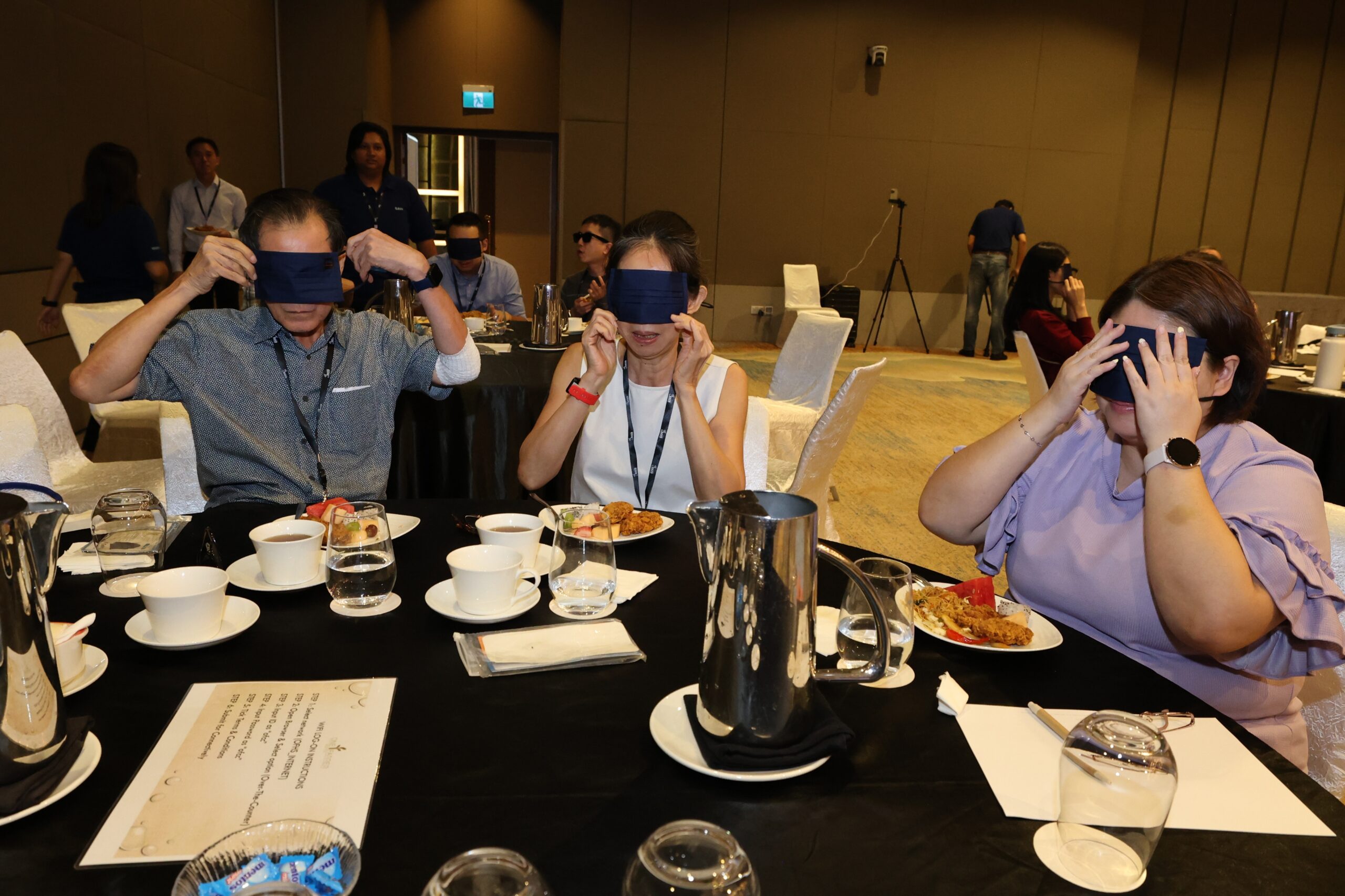
Participants also took part in a meaningful experiential exercise during tea breaks, dining blindfolded, and later with earplugs, to better understand the challenges faced by individuals with vision and hearing loss.
Ms Vanessa Loh, General Manager of Guide Dogs Singapore and conference participant, shared, “This was a valuable opportunity to reconnect with familiar faces in the VI space and hear about changes and improvements we can work towards. I’m thankful to SAVH for providing this platform, especially with policy makers and decision-makers present.”
Echoing this sentiment, Ms Elizabeth Chua, Assistant Manager (Employment Services) at SPD and a panellist on improving employability for persons with visual impairment, said, “I am thankful for the opportunity to contribute as a panellist at the inaugural SAVH Vision Rehabilitation Conference. The exchange of knowledge reinforced the importance of building cross-sector partnerships to support persons with vision loss in achieving independence and meaningful employment. I look forward to seeing these ideas translate into solutions that will enable us to adopt more inclusive practices.”
Through these conversations and collaborations, SAVH aims to strengthen support systems,
promote inclusivity, and pave the way for greater independence and opportunities for persons with visual impairment.